
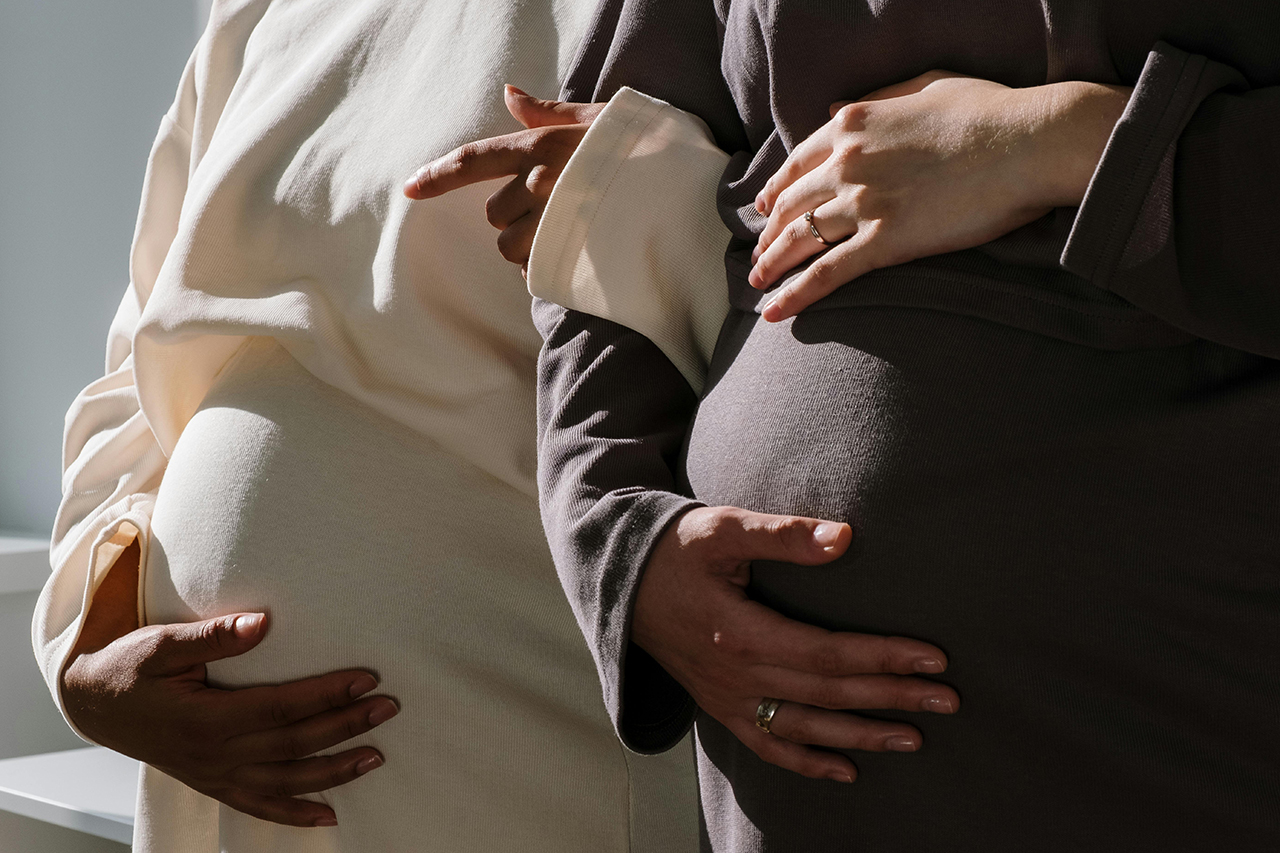
You’re right, God does not have a gender in the binary sense that is taught in Biology 101. But if we had to do so, what we see God doing seems to fit more into the “mom” category of things. Genesis 2:7 depicts the forming of Adam, a very motherly act. And where did the substance for what Adam would be formed out of come from? From Mother Earth, of course!
Yes, I see the door marked “heretic” that’s been prepared for me as I write this, and I’ll walk through it shortly, but I’d like to make it worth it before I depart.
The creation stories of the Bible have been pulled dissected for the scientific accuracy, analyzed as poetry and myth, and placed among other creation myths for generations. How boring! Let’s breathe some new life into these stories.
The matriarchal nature of the biblical creation stories makes me wonder why we ever conceived of God as an old white-bearded guy in the sky. Out of a dark void is birthed the entire universe, the very womb of God, says Genesis 1:2. There is nothing but water at first but soon the rest would slowly appear. The mothering God gives birth to all things.
Sure, God is portrayed as a bit bossy in the Genesis 1 account, giving orders with the refrain of “Let there be…” and so forth. But this is clearly mother getting the household in order. Dissatisfied with the chaos of the universe, this boss-b***h gets to work. In six days (whatever a “day” is in this poem, I don’t care) we’ve got it all ship-shape and there’s even time for rest. Work-life balance, yes please!
The Genesis 2-3 combo doesn’t break us out of matriarchal mode, either. God’s partner, Mother Earth, is featured as the womb of creation. Earth as Mother is not a strictly Christian idea but that’s likely because of patriarchy more than anything else. Many cultures refer to the earth in feminine terms, and it makes sense. All life comes forth from the earth, and she provides the sustenance that we need—just as God designed her to.
Why does this matter? Our past, specifically our origin stories, help us to answer the questions of why we’re here and what we are to be about. When we view creation in patriarchal or male-dominated terms, we tend toward the dangerous territory of colonialism and domination. When we shift toward a matriarchal view, we can focus on a nurturing, interdependent embodiment of life. We can shift away from a survival of the fittest that defines fit as strength and instead defines fit as suitability. Humanity’s two moms want to make sure we grow into a people who are well suited to take care of the earth.
